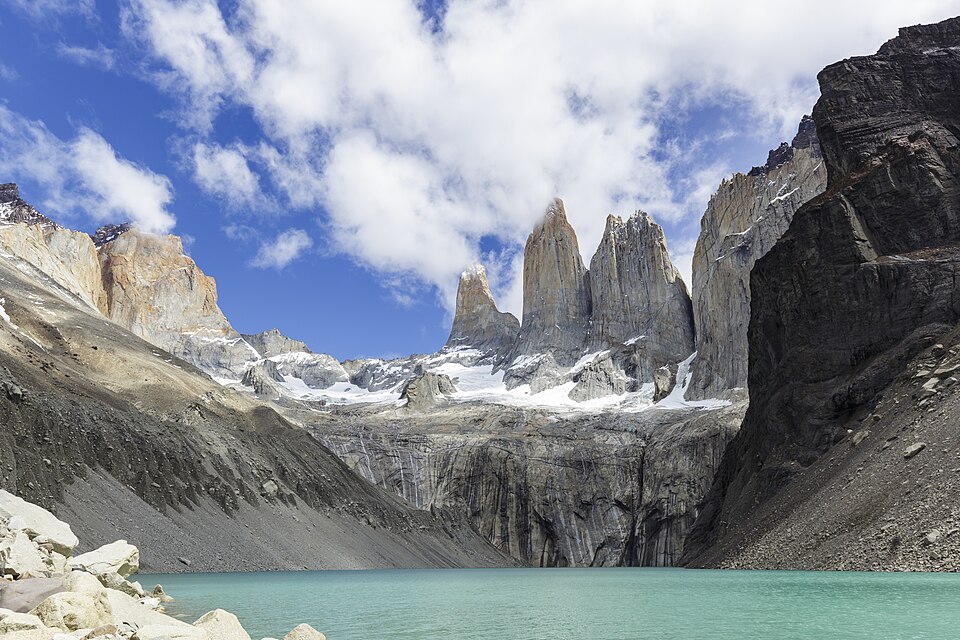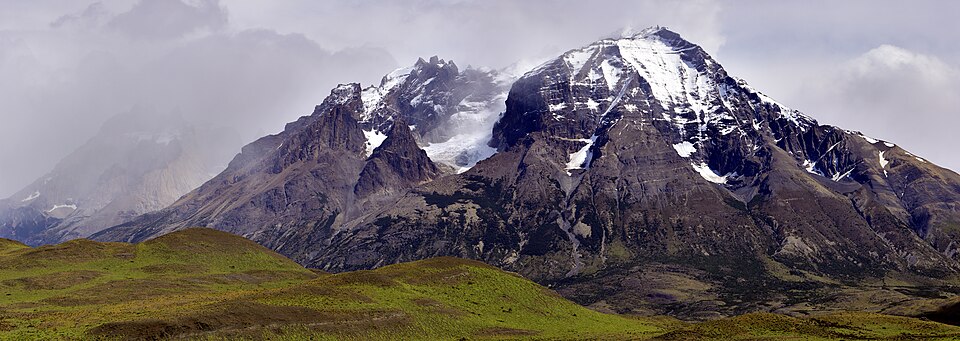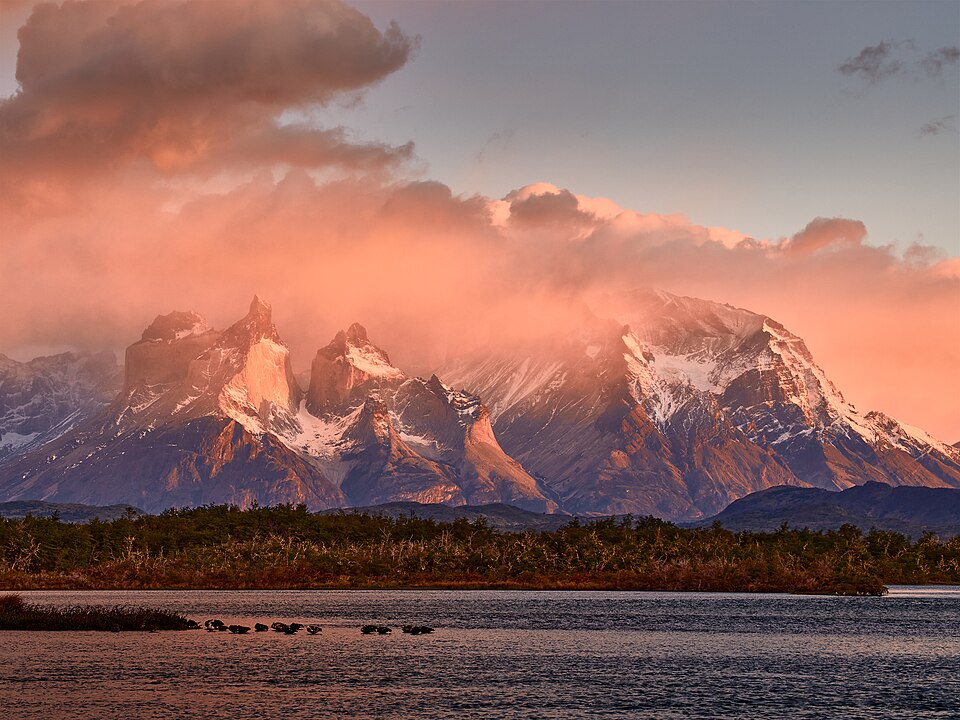
Torres del Paine National Park lies in Chilean Patagonia, near the southern tip of South America. Its symbols are the three granite towers that give the park its name and the dark-capped horns of the Cuernos del Paine.
Around them lie turquoise lakes, the Grey Glacier, open steppe roamed by guanacos, and one of the best places in the world to see wild pumas.
How to get there
By air
Fly from Santiago to Punta Arenas (PUQ), then take a bus of about 3 hours to Puerto Natales. In season there are also direct flights from Santiago to Puerto Natales (PNT).
Into the park
Buses run from Puerto Natales to the park entrances in about 2 hours. From Argentina, buses run from El Calafate to Puerto Natales, crossing the border.
Permits and bookings
Park tickets must be bought online in advance, and multi-day treks such as the W and the O circuit require confirmed campsite or refugio bookings.
Where to stay
-
Puerto Natales
The gateway town on the Última Esperanza sound, with cottages, guesthouses and gear rental.
Search stays here in Puerto Natales (opens Google) -
Inside the park
Refugios, domes and lodges along the trails, booked through the park's concessionaires.
Search stays here in Inside the park (opens Google) -
Estancias around the park
Working sheep ranches outside the park boundary offering cabins and horse riding.
Search stays here in Estancias around the park (opens Google)
What to do
Hike to the base of the towers
A long day hike of about 20 km return, ending with a steep climb to the lake beneath the three towers.
Trek the W
The classic 4 to 5 day route through the Ascencio, French and Grey valleys.
Cruise to Grey Glacier
Boats cross Lago Grey to the glacier's ice face, past drifting icebergs.
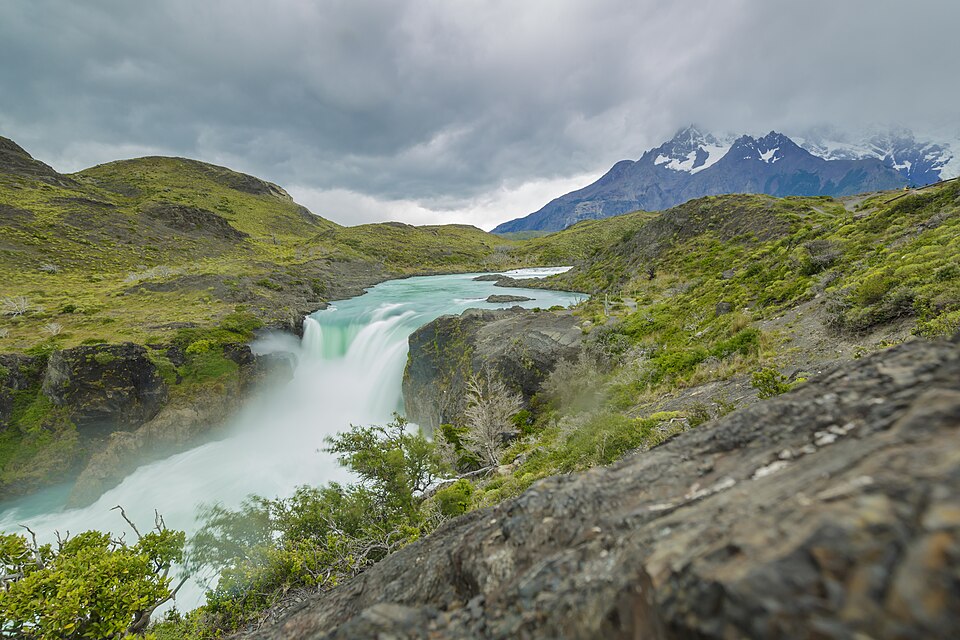
See Salto Grande
A powerful waterfall between Lago Nordenskjöld and Lago Pehoé, an easy walk from the road.
Track pumas
Guided wildlife tours on the eastern side of the park have some of the best puma sightings anywhere.
Visit Cueva del Milodón
A huge cave near Puerto Natales where remains of a giant ground sloth were found.
Good to know
- Wind is the defining feature: gusts can exceed 100 km/h, so pack a windproof shell.
- Summer days are very long, which helps on big hikes.
- Fires are strictly banned in the park; stoves only in designated areas.